The news coming out of The Italian Sea Group in recent days is increasingly taking on the tone of a financial thriller, of which we are probably witnessing only the opening chapter.
Just yesterday came the announcement of the launch of a “forensic due diligence,” meaning an in-depth investigation aimed at assessing hidden risks or potential wrongdoing, to be carried out by a third party — in this case, KPMG.
A very serious investigation, the reasons for which are clearly outlined in the above-mentioned press release, which we quote verbatim:
“The Company has incurred significant extra-budget costs in the execution of its projects. This was made possible by the fact that a group of individuals implemented a system designed to bypass the block on exceeding the expenses set out in the authorized budget for each project. The scope of the group and the identity of these individuals, currently only partially defined, are in the process of being definitively ascertained as part of the forensic due diligence. The total amount of the extra-budget costs will be precisely determined following the completion of the forensic due diligence. From the initial findings of the investigations carried out by the Company, it has also emerged that among the individuals involved in the alleged irregularities are, among others, certain senior figures within the company, who have declared themselves to be the authors and responsible parties for actions carried out without the knowledge of the Chief Executive Officer, the Board of Directors, and the supervisory bodies”.
But how did it come to this? What happened within the group led by Giovanni Costantino?
To understand this, we need to analyze the events in chronological order.
The Italian Sea Group, the timeline of events
The Italian Sea Group was listed on the Italian Stock Exchange in the MTA segment — now known as Euronext Milan — on June 8, 2021, with a placement price of €4.9 per share. The stock initially enjoyed strong momentum, peaking in 2024 at prices above €10. From that point on, however, it entered a steady decline, falling back by the end of January to a level very close to its original listing price.
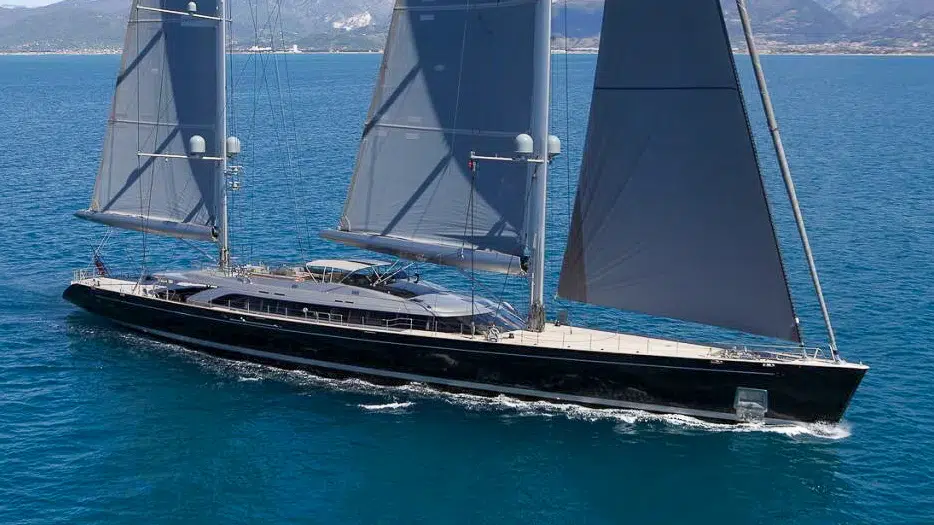
It is also worth recalling that in December 2021 The Italian Sea Group acquired Perini Navi for €80 million — a decidedly expensive deal, even for such a prestigious brand. A brand that was then tragically marked by the sinking of the Bayesian in August 2024. In this context, while it is clear that The Italian Sea Group was not involved in that event, it is equally evident that the reputation of Perini, a builder of large yachts, was inevitably affected.
This brings us to February 18 of this year, when the Board of Directors of The Italian Sea Group acknowledged “the emergence of extra-budget costs in the majority of ongoing projects” which “have had negative impacts on TISG’s cash position, due to the resulting reduction in operating margins, combined with the need to continue bearing production costs for ongoing orders”.
A situation that simultaneously forced the company to define a financial strengthening plan, implemented through a shareholder loan: Giovanni Costantino, the majority shareholder, injected €25 million through his holding company.
On February 27, two further concerning press releases were issued. The first announced the resignation of Chairman Filippo Menchelli (replaced by Giovanni Costantino) and Vice Chairman Marco Carniani; the second concerned the resignation of Dr. Laura Angela Tadini, a member of the Board of Directors and of the Risk Control Committee.
Dr. Tadini’s resignation took place in a climate of clear disagreement, as can be read directly in the press release:
“Dr. Tadini stated that, while sharing the need to resolutely address the difficult phase the Company is experiencing and appreciating the efforts undertaken in this regard, a divergence of views emerged between herself and the rest of the Board of Directors concerning the operational methods deemed most appropriate for managing the situation. In particular, the divergence concerned the appointment of the new employer replacing the resigning Dr. Menchelli, with respect to which Dr. Tadini expressed her opposition. As it was not possible to reach a shared solution on this matter, Dr. Tadini considered that the conditions no longer existed for the effective continuation of her mandate”.
“The Chief Executive Officer informed the Board of Directors that the payment of employee salaries was delayed by eight days compared to ordinary timing, due to insufficient liquidity in the period between February 4, 2026 and the completion of the shareholder loan from GC Holding, attributable to Giovanni Costantino, disbursed on February 19, 2026”.
The same press release also mentions a payment request received from International Factor Italia Spa and that, following this request, the Board of Statutory Auditors submitted a report to the Board of Directors pursuant to Article 25-octies of Legislative Decree No. 14/2019, noting the probable existence of the conditions referred to in Article 2, paragraph 1, letters a) and b) of the same decree.
This is a highly significant notice, relating to the verification of the possible existence of a crisis situation and/or to the assessment of debt sustainability.
To complete an already troubling picture, the share price has been in free fall since February 18 and, at the time of writing, is trading at €1.8 per share.